Surface protection films are widely used to protect materials such as stainless steel, aluminum panels, decorative laminates, glass, and metal composite panels from scratches, contamination, and damage during manufacturing, transportation, and installation. These films act as a temporary shield that preserves the original finish and quality of valuable surfaces.
However, modern industries require more than just protection. Today, printed protective films also serve as a powerful communication and branding tool. Companies print logos, installation instructions, warnings, and brand identity elements directly onto the film.
This is made possible through advanced printing technologies in protective films, including Surface Printing, Sandwich Printing, and Trap Printing, which ensure durability, clarity and long-lasting branding.
Why Printing Matters in Protective Films
Protective films are now an integral part of industrial processes across sectors like construction, appliances, automotive, electronics, and laminates.
By incorporating custom printed protective films, manufacturers can:
- Display brand identity across the supply chain
- Provide installation or removal instructions
- Prevent incorrect usage during production
- Improve product traceability
- Strengthen brand visibility on every surface
Companies like Ecoplast, a leading supplier of multilayer polyethylene and co-polymer films, combine advanced film manufacturing with precision printing technologies to deliver high-performance protective films for multiple industries.
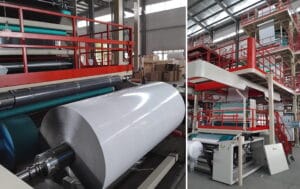
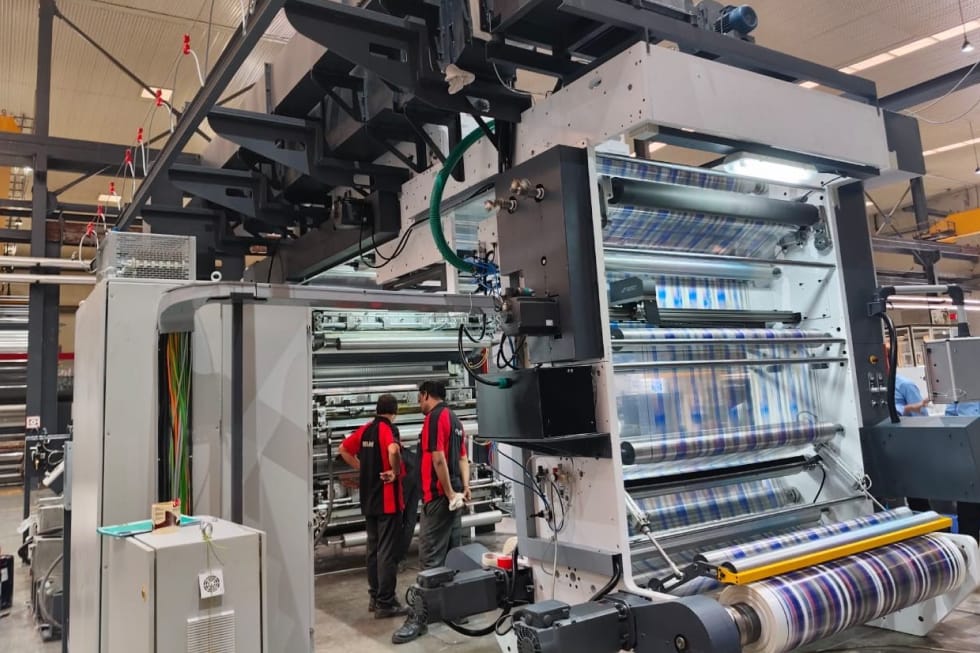
Their automated manufacturing facility includes extrusion, printing, lamination, coating, and converting technologies, ensuring consistent film quality and high-precision print output.
What is Surface Printing?
Surface printing is one of the most commonly used protective film printing methods, where the design or ink is printed directly on the outer surface of the film. This process typically uses CI or Stack printing technology to achieve precise and consistent print quality. At Ecoplast, we offer both of the above printing methods with state-of-the-art CI Flexo and Stack machines.
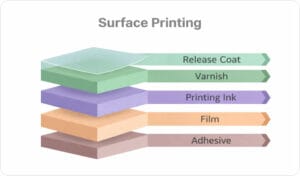
In many applications, a release coat layer is added above the printed surface. This layer helps the protective film peel off smoothly without leaving adhesive residue and also protects the printed graphics during handling and processing.
A typical structure of a surface printed protective film includes:
- Release Coat – Enables clean removal of the film
- Varnish Layer – Protects the printed design
- Printing Ink – Contains logos or instructions
- Film Layer – Provides surface protection
- Adhesive Layer – Ensures proper adhesion to the surface
Advantages:
- High visual clarity for logos and instructions
- Faster and cost-effective production
- Suitable for standard branding needs
Limitations:
Because the print is on the outer surface, it may be exposed to scratches or abrasion during handling and manufacturing. For higher durability, sandwich printing or trap printing methods are often preferred.
Sandwich Printing
What is Sandwich Printing?
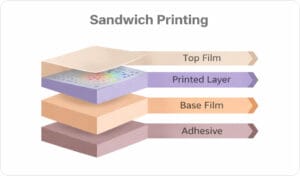
Sandwich printing places the printed design between two layers of film, protecting the ink from direct exposure to mechanical wear or environmental conditions.
In this process:
- The design is printed on the inner side of the film.
- Another film layer is laminated over the print.
This “sandwich structure” keeps the print safe while maintaining visibility through the transparent outer layer.
Key Features:
- Print embedded between film layers
- Higher resistance to scratches and abrasion
- Ideal for long manufacturing cycles
Advantages:
- Improved durability
- Long-lasting print quality
- Clean and professional appearance
Applications:
Sandwich printing is commonly used for:
- Decorative laminate protection films
- Glass protection films
- Aluminum composite panels
- Appliance surface protection
Trap Printing Technology
What is Trap Printing?
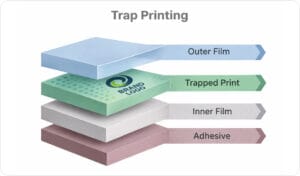
Trap printing is an advanced technology that embeds the printed design directly within the protective film structure.
This technique ensures that the brand logo, instructions, or identification markings remain protected throughout the manufacturing process, even in demanding industrial environments.
Key Benefits:
Superior Print Protection
The print remains shielded from abrasion, scratches, and chemicals.
Strong Brand Visibility
Logos and branding remain clearly visible across the entire supply chain.
Manufacturing Efficiency
Process instructions and markings can be printed directly on the film.
High-Quality Visual Results
Ensures consistent and sharp graphics even during heavy industrial processing.
Trap printing is especially beneficial for industries that require both high-performance surface protection and consistent branding.
Printing Infrastructure and Technology
Producing high-quality printed protective films requires advanced infrastructure and strict quality control.
Manufacturers like Ecoplast invest heavily in modern production systems that integrate extrusion, printing, lamination, coating, and converting technologies within an automated manufacturing setup.
Their facilities also include:
- Advanced testing equipment
- Automated production machines
- Sophisticated monitoring systems
- Highly trained technical teams
These capabilities ensure films meet strict performance standards while maintaining precise printing quality.
Additionally, Ecoplast provides custom print design services with up to three colors, allowing companies to incorporate logos, branding, and operational instructions directly onto the film surface.
This enables businesses to use protective films not just for safety, but also as a branding and operational communication tool.
Custom Printing in Protective Films
Modern protective films can include several types of printed information, such as:
- Brand logos
- Company names
- Product identification
- Installation instructions
- Removal guidelines
- Processing instructions
These features help streamline manufacturing operations while reinforcing brand presence throughout production and distribution.
Custom printing solutions also ensure high-resolution graphics, vibrant colors, and scuff-resistant designs, maintaining brand integrity even in demanding industrial environments.
Manufacturers must evaluate their production environment, surface material, and handling conditions before selecting the ideal printing technology.
Choosing the Right Printing Technology
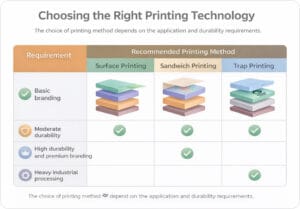
The choice of printing method depends on the application and durability requirements.
Conclusion
Protective films are evolving from simple protective layers into powerful tools for branding, communication, and operational efficiency. With advanced printing technologies in protective films, companies can integrate logos, instructions, and product information directly onto the film without compromising its protective performance.
Technologies such as Surface Printing, Sandwich Printing, and Trap Printing allow manufacturers to choose the ideal balance between cost, durability, and branding visibility.
By combining advanced infrastructure, precision printing technology, and customized film solutions, companies like Ecoplast help industries protect their products while strengthening brand identity across every stage of the supply chain.
👉 Contact us today for a free consultation or custom quote!
📧 Email: [email protected]
🌐 Website: www.ecoplastindia.com