When it comes to transparent adhesive films, one size doesn’t fit all. The effectiveness of a film depends heavily on its adhesive strength commonly referred to as adhesive tack levels. Whether you’re working with delicate surfaces or demanding industrial environments, choosing between low tack adhesive film, medium tack adhesive, or high tack adhesive film can significantly impact performance, durability, and application efficiency.
Understanding the differences between these tack levels helps businesses make smarter decisions, especially in industries where film adhesion strength directly affects product quality and longevity.
What is Adhesive Tack?
Adhesive tack refers to the initial stickiness of an adhesive film when it comes into contact with a surface. It determines how quickly and firmly the film bonds without requiring excessive pressure.
In simple terms:
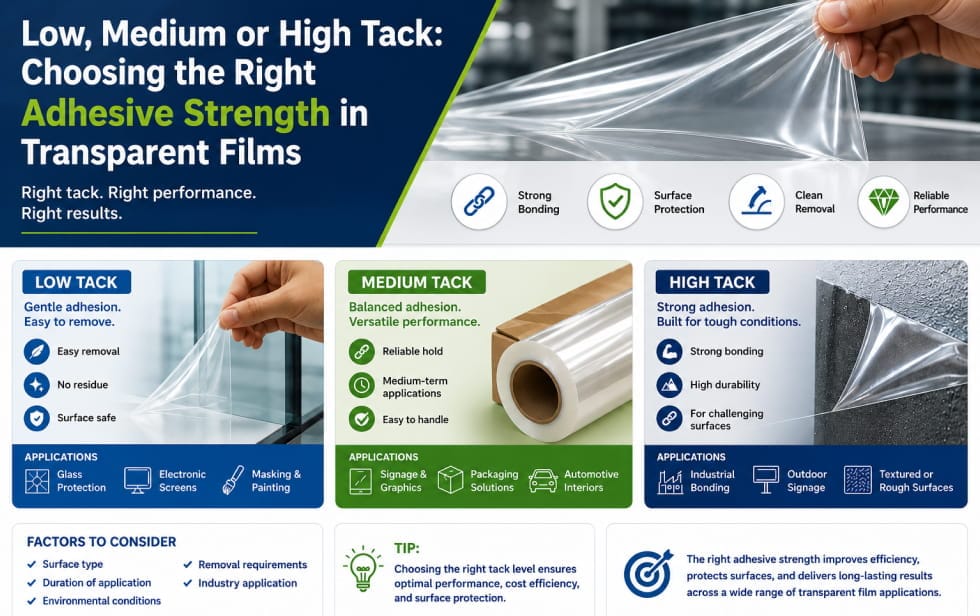
- Low tack = easy to remove, gentle adhesion
- Medium tack = balanced grip and removability
- High tack = strong
Selecting the right level is crucial for ensuring optimal bonding strength in films without damaging the surface.
Low Tack Adhesive Film: Gentle Yet Effective
Low tack films are designed for applications where easy removal is essential. These films provide light adhesion and are ideal for temporary use.
Key Features:
- Easy to apply and remove
- Leaves minimal or no residue
- Suitable for delicate surfaces
Common Applications:
- Temporary surface protection
- Glass and acrylic surfaces
- Electronic screens and displays
- Masking during painting or processing
Low tack transparent protection films are especially useful in industries where surface integrity must remain intact after removal.
Medium Tack Adhesive: The Perfect Balance
Medium tack adhesives strike a balance between adhesion strength and removability. They are versatile and widely used across industries.
Key Features:
- Moderate bonding strength
- Reliable hold without being overly aggressive
- Suitable for both short-term and medium-term applications
Common Applications:
- Signage and graphics
- Packaging solutions
- Automotive interiors
- General industrial use
For businesses seeking dependable transparent film applications without permanent bonding, medium tack is often the go-to choice.
High Tack Adhesive Film: Strong
High tack adhesive films are engineered for maximum adhesion. These films are designed to bond firmly with surfaces, even those that are rough, uneven, or low-energy.
Key Features:
- Strong, aggressive adhesion
- Long-lasting and durable
- Suitable for challenging surfaces
Common Applications:
- Industria
- Outdoor signage
- Textured or rough surfaces
High tack films ensure superior film adhesion strength, making them ideal for applications where failure is not an option.
Factors to Consider When Choosing Adhesive Tack Levels
Selecting the right adhesive strength isn’t just about preference—it’s about performance. Here are key factors to evaluate:
- Surface Type: Smooth surfaces like glass require lower tack, while rough or porous surfaces need higher tack for effective bonding.
- Duration of Application: Temporary uses benefit from low tack films, whereas long-term or permanent applications require medium to high tack.
- Environmental Conditions: Exposure to heat, moisture, or dust can affect adhesion. High tack films perform better in extreme conditions.
- Removal Requirements: If clean removal is critical, low or medium tack adhesives are preferable.
- Industry Application: Different industries from automotive to packaging have unique requirements for transparent adhesive films.
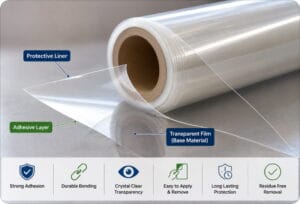
Why Adhesive Selection Matters
Choosing the wrong tack level can lead to:
- Poor adhesion or peeling
- Surface damage
- Residue issues
- Increased costs due to rework
On the other hand, the right choice enhances efficiency, ensures durability, and improves overall product performance.
Ecoplast’s Expertise in Transparent Adhesive Films
At Ecoplast, innovation meets precision. With years of expertise in manufacturing high-quality films, Ecoplast offers solutions tailored to diverse industrial needs.
Their range of transparent protection films and adhesive solutions is designed to deliver:
- Consistent performance
- Superior bonding strength in films
- Customization based on application requirements
Whether you need low tack for delicate surfaces or high tack for demanding environments, Ecoplast ensures reliability and quality at every level.
FAQs on Adhesive Tack Levels in Transparent Films
1. What are adhesive tack levels in transparent adhesive films?
Adhesive tack levels refer to the initial stickiness or bonding strength of a film when applied to a surface. They determine how strongly the film adheres and how easily it can be removed.
2. When should I use low tack adhesive film?
Low tack adhesive films are best for temporary applications, delicate surfaces, and situations where residue-free removal is important, such as glass protection or electronic displays.
3. What is the difference between medium tack and high tack adhesive?
Medium tack adhesives provide balanced adhesion and removability, while high tack adhesives offer strong, long-lasting bonding suitable for rough or demanding surfaces.
4. How do I choose the right film adhesion strength?
You should consider surface type, application duration, environmental conditions, and removal needs to select the appropriate adhesive strength.
5. Can transparent protection films be reused?
Low tack films may be reusable in some cases, but medium and high tack films are generally designed for single-use applications.
6. Do environmental factors affect adhesive performance?
Yes, temperature, humidity, and dust can impact adhesion. High tack films are typically more resistant to extreme conditions.
👉 Contact us today for a free consultation or custom quote!
📧 Email: [email protected]
🌐 Website: www.ecoplastindia.com