In cable manufacturing, the bond between aluminium foil and the outer polymer layer plays an important role in the performance of shielding tapes. If these layers separate during processing or use, the cable can lose some of its intended shielding and protective performance. This is why choosing the right film matters, particularly in applications involving telecom cables, power cables, data cables and optical fibre cables.
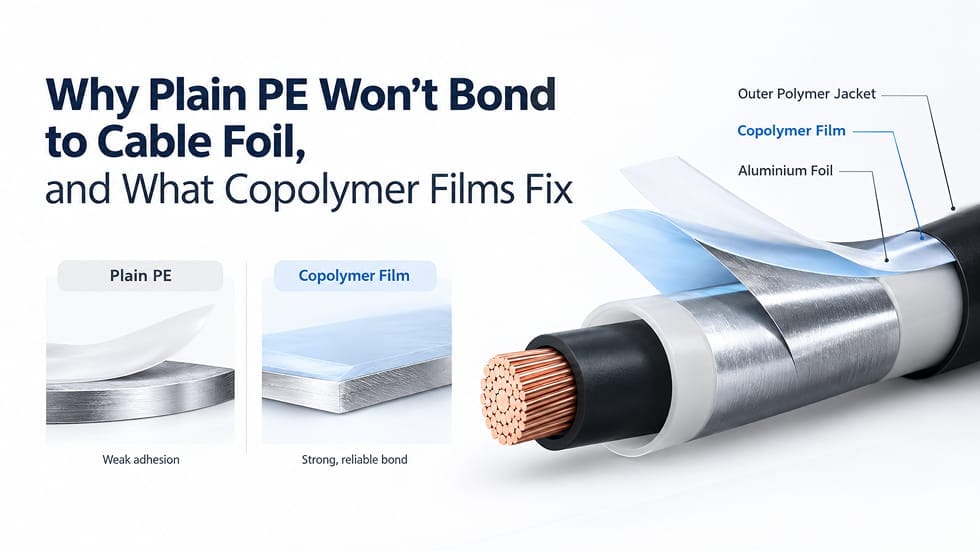
Low-density polyethylene (LDPE) is widely used in cable applications because of its flexibility, moisture resistance and processing characteristics. However, when plain PE comes into contact with aluminium foil, achieving a strong and lasting bond can be difficult. The issue lies in the difference between the surface properties of the two materials.
A copolymer coated aluminium tape addresses this challenge by introducing a bonding layer designed to improve adhesion between the metal foil and the polymer jacket. Understanding how this layer works can help cable manufacturers make better material choices and reduce problems during production and service.
Why Does Plain Polyethylene Fail to Bond with Aluminium Cable Foil?
Polyethylene has a relatively low surface energy and a non-polar molecular structure. Aluminium, on the other hand, has a metal oxide surface with different chemical characteristics. Since these surfaces do not naturally interact strongly, plain PE generally does not form a reliable bond with aluminium foil under ordinary processing conditions.
Even when heat is applied, simply bringing the two materials together may not create sufficient adhesion. The molten PE can spread poorly across the foil surface, resulting in a weak interface that may separate under stress.
This can become a practical issue during lamination, extrusion jacketing and subsequent cable handling. If the bond is inconsistent, the foil and polymer layers may begin to peel apart, affecting the integrity of the cable shielding tape.
Another concern is long-term performance. Repeated bending, temperature changes and mechanical stress can place additional strain on the interface. Over time, a weak bond may contribute to tape fatigue and delamination.
For cable manufacturers, the solution is not necessarily to change the entire cable structure. In many cases, selecting a film with the right bonding properties can address the problem more effectively.
How Do Copolymer Films Improve Foil Bonding?
Copolymer films are designed to address the adhesion limitations of plain polyethylene. By incorporating polymer components with different chemical characteristics, manufacturers can create a film that bonds more effectively with metal surfaces while retaining useful polyethylene properties.
A polar copolymer contains chemical groups that interact more favourably with metal surfaces than ordinary non-polar PE. This helps improve adhesion at the interface between the aluminium foil and the polymer layer.
In a copolymer coated aluminium tape, the bonding layer can help connect the foil with the outer cable jacket. The result is a more integrated laminate, provided the film grade and processing conditions are suited to the application.
The benefits extend beyond initial adhesion. A properly selected film can support consistent lamination, reliable heat sealing and better resistance to separation during handling. The exact performance depends on the copolymer formulation, foil surface, temperature, pressure and processing speed.
Why Film Selection Matters in Cable Shielding Tape
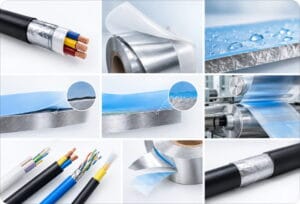
Cable shielding tape is used to provide electromagnetic interference (EMI shielding) and electrostatic screening, depending on the cable design. Aluminium foil is commonly used because it offers an effective conductive shielding layer, while the polymer film helps integrate the foil into the cable structure.
For example, in jelly-filled telecom cables, the foil laminate can also contribute to a moisture barrier. In optical fibre cables and other communication cables, the bonding layer needs to work with the selected jacket material and support the required handling and installation performance.
A weak interface can cause the layers to separate during bending or cable processing. In an armoured cable, where additional protective layers may be involved, dependable bonding between the relevant materials helps maintain the intended structure.
Plain LDPE may still be suitable for many cable applications, but where direct foil adhesion is required, a purpose-designed copolymer film can be a more appropriate choice.
What to Consider When Choosing a Copolymer Film
The right film depends on the cable construction and the manufacturing process. Before selecting a material, cable manufacturers should assess a few practical factors.
- Foil adhesion: Check whether the film is designed to bond with aluminium foil or the specific metal tape used in the cable.
- Jacket compatibility: Confirm adhesion with LDPE, MDPE or HDPE, depending on the extrusion jacketing material.
- Heat activation: Ensure the film develops the required bond within the available processing temperature and pressure range.
- Moisture protection: Consider the moisture barrier requirements of the finished cable, especially for telecom applications.
- Mechanical durability: Evaluate flexibility, peel strength and resistance to tape fatigue under expected operating conditions.
- Process consistency: Check that the film can run reliably at the intended line speed and maintain consistent bonding.
Copper tape may be used in certain shielding designs, but the bonding requirements differ from those of aluminium foil. Film selection should therefore be based on the actual metal substrate and the complete laminate structure rather than assuming one solution will work for every cable.
Get Reliable Foil-to-Jacket Bonding with Ecoplast’s Cable Films
Ecoplast develops specialty multilayer PE and copolymer films for cable applications where bonding, moisture protection and processing performance are important. Its ECOPRIME® 108 series includes film grades designed for different telecommunication and optical fibre cable constructions.
ECOPRIME® 108-A1 is used in jelly-filled cable structures, where the film is laminated with aluminium foil and PET. The film is designed for metal adhesion and effective sealing, including under low-temperature conditions and in the presence of contamination.
Other grades in the series are developed for cable armouring and shielding applications. ECOPRIME® 108-A2 and 108-A4 are designed to bond with ECCS tape and LDPE, MDPE or HDPE jacketing materials, while ECOPRIME® 108-A3 supports bonding between ECCS tape and an HDPE jacket in optical fibre cable applications.
These application-specific solutions help manufacturers select films according to their cable design, metal substrate and processing requirements. Ecoplast also considers factors such as film compatibility, lamination conditions, machinability and heat-sealing requirements when developing film structures.
For manufacturers evaluating a copolymer coated aluminium tape solution, the key is to select a film that supports reliable bonding on both sides of the laminate while meeting the requirements of the finished cable.
Conclusion
Plain polyethylene offers useful flexibility and moisture resistance, but its non-polar surface makes strong adhesion to aluminium foil difficult. Copolymer films help bridge this gap by improving metal adhesion while retaining the properties needed for cable manufacturing.
Choosing the right cable shielding tape film involves more than checking the polymer type. Foil adhesion, jacket compatibility, heat activation, mechanical durability and moisture protection all need to be considered together.
With application-specific solutions from its ECOPRIME® 108 series, Ecoplast supports cable manufacturers in selecting films suited to their lamination and jacketing requirements.
Better bonding starts with the right film.
👉 Contact us today for a free consultation or custom quote!
📧 Email: [email protected]
🌐 Website: www.ecoplastindia.com