Flexible packaging is rapidly transforming India’s FMCG landscape, redefining how products reach consumers. With rising demand for sustainable packaging solutions, recyclable flexible films, and convenience driven designs, brands are adapting fast.
Flexible packaging, with its light weight, cost efficiency, and design flexibility, has emerged as the go-to choice for brands that want to connect with modern consumers while staying competitive.
In 2025, three forces are shaping the future of flexible film packaging in India: sustainability, branding, and cost optimization.
1. Food Safety at the Forefront
India’s growing packaged food market — from snacks to dairy to ready-to-eat meals — demands packaging that does more than look good. It has to keep food fresh, safe, and shelf-stable.
This is where flexible barrier packaging shines:
- Multilayer structures protect against oxygen, moisture, and light.
- Advanced coatings can add antimicrobial or antioxidant properties.
- Flexible films are lightweight yet strong, reducing transportation costs while safeguarding the contents.
With FSSAI standards becoming stricter, food brands are increasingly relying on packaging partners who can guarantee safety and have credibility in the space, like Ecoplast Ltd.
2. Automation-Friendly Designs
The shift to packaging automation trends is not just for big FMCG players anymore. Mid-sized and even smaller brands are embracing automated filling, sealing, and printing systems to keep up with demand and labor challenges.
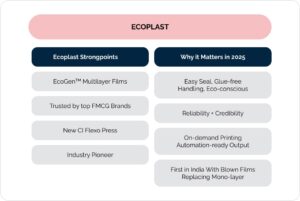
- High quality printing like on our stack press or CI-Flexo at Ecoplast Ltd allows brands to stand out with exceptional printing capabilities.
- Consistent, machine-friendly flexible films reduce downtime and improve efficiency on high-speed lines.
For Ecoplast’s lamination films, being automation-ready is a key differentiator in a competitive market.
3. Branding That Works Harder
Flexible packaging is no longer a blank canvas, it’s a brand’s handshake with the consumer.
Vibrant printing, textured finishes, and interactive elements (like QR codes leading to recipes or videos) are turning packaging into a mini marketing channel.
4. The Cost Equation
While sustainability and branding grab headlines, cost optimization remains a daily battle in FMCG. The smartest brands are:
- Using lighter film structures that still protect contents
- Choosing recyclable materials that lower disposal and compliance costs
- Optimizing pack sizes to reduce both material and transport expenses
This is where innovation meets practicality and where Ecoplast’s tailored flexible film packaging sustainability solutions make a measurable difference.
5. The Sustainability Shift
Walk into any supermarket today and you’ll notice a subtle revolution — pouches and packs that proudly carry the Recyclable label. This isn’t just clever marketing, it’s a direct response to both consumer demand and regulatory push.
- EPR mandates (Extended Producer Responsibility) are forcing FMCG companies to rethink packaging material choices.
- Recyclable flexible films are not only reducing landfill waste but also helping brands improve their sustainability scores. We create films with intention so that they are not single-use.
Positioning Ecoplast
Ecoplast can shine by:
- Emphasizing Sustainable Lamination Films
Showcase biodegradability and high recycled content, aligned with EPR and consumer eco-awareness. - Enhancing Food Safety Features
Offer barrier solutions, antimicrobial layers, and supportive coatings to boost shelf life and hygiene. - Supporting Automation & Customization
Promote lamination films compatible with digital printing and automated packaging lines. - Catering to Convenience Needs
Provide flexible films optimized for lightweight, resealable, and e-commerce-friendly packaging formats. - Aligning with Regulations
Highlight compliance with Ecomark standards, FSSAI guidelines, and LiFE-aligned sustainability goals.
Next Stop: Packaging Redefined
If your brand is aiming for FMCG pack innovation that sells, protects, and respects the planet it’s time to look beyond packaging suppliers. Talk to Ecoplast, where film meets strategy, and the future of flexible packaging becomes real.
Conclusion
In 2025, India’s flexible packaging scene is a melting pot of sustainability, technology, and consumer-first design. For FMCG brands and packaging converters alike, the future hinges on offering recyclable, safe, on-demand, and cost-efficient solutions that resonate with modern Indian consumers.
Ecoplast is well-positioned to lead, with lamination films that align with sustainability mandates, food safety needs, and automation trends bridging functionality with environmental stewardship.
👉 Contact us today for a free consultation or custom quote!
📧 Email: [email protected]
🌐 Website: www.ecoplastindia.com