When it comes to safeguarding carpets during construction, renovation, or high-traffic use, choosing the right carpet protection film is critical. Whether you’re a contractor, facility manager, or homeowner, the decision often comes down to one key question: sticky (self-adhesive) or non-sticky (non-adhesive) film?
Both options serve the same purpose protecting carpets from dirt, spills, and damage but they perform very differently in real-world situations. Let’s break down the differences so you can choose the right temporary carpet protection for your project.
What is a Carpet Protection Film?
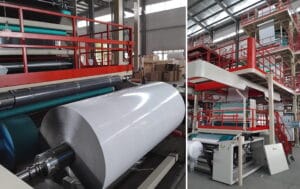
A carpet protection film is a temporary protective plastic layer designed to shield carpets from dust, paint, moisture, and foot traffic. Most films are made from polyethylene and act as a barrier between the carpet and external elements.
These films are widely used in:
- Construction and renovation projects
- Painting and interior work
- Moving and storage
- Events and exhibitions
Using the right protective plastic for carpet not only prevents damage but also reduces cleaning and maintenance costs.
What is a Sticky (Self-Adhesive) Carpet Film?
Sticky film, also known as self adhesive carpet film, comes with a pressure-sensitive adhesive backing that sticks directly to the carpet surface.
Key Features:
- Firm grip on carpet fibers
- Easy application (just roll and stick)
- Stays in place even under heavy foot traffic
- Removes cleanly when used correctly
The adhesive layer forms a secure bond, ensuring the film doesn’t shift or wrinkle during use.
Advantages:
Excellent stability – Ideal for high-traffic areas like hallways or construction zones
Better protection – Blocks dust, paint, and moisture effectively
Time-saving – No need for tapes or additional fixing
Limitations:
Risk of residue if left too long or used incorrectly
Not suitable for delicate or natural fiber carpets without testing
Limited duration of use (typically short-term applications)
What is Non-Sticky (Non-Adhesive) Carpet Film?
Non-sticky film is a non adhesive plastic sheet that does not have glue. It stays in place using weight, static, or external fixing methods like tape.
Key Features:
- No adhesive layer
- Breathable and reusable in some cases
- Requires manual fixing
Advantages:
No residue risk – Since there is no adhesive, there is no chance of transfer
Long-term use – Can stay in place for extended durations, but not recommended as a permanent solution.
Limitations:
Can slip or move under heavy foot traffic
Requires additional securing methods like weights that can be hazardous at sites
Less effective in vertical or high-movement areas
When Should You Choose Sticky Carpet Protection Film?
Go for sticky vs non sticky plastic sheet (adhesive option) when:
- You’re working in high-traffic zones
- There’s heavy movement of tools or materials
- You need quick installation and removal
- You want maximum surface protection
Sticky films are widely used in construction sites because they stay firmly in place and protect carpets from constant wear and tear.
When Should You Choose Non-Sticky Carpet Protection?
Choose non-adhesive film when:
- The carpet is of pure wool/silk
- You are not sure about project duration
- There’s minimal foot traffic
Non-sticky films are ideal for events, storage, or situations where carpets need to “breathe” and remain untouched by adhesives.
Common Mistakes to Avoid
Regardless of the type you choose, improper usage can reduce effectiveness:
- Using strong adhesive films on sensitive carpets
- Leaving sticky films on for too long
- Not cleaning the carpet before application
- Choosing based on price instead of application needs
Selecting the right carpet protection film ensures better results and avoids damage.
Final Verdict: Which One is Better?
There’s no one-size-fits-all answer. The choice between sticky vs non sticky plastic sheet depends on your specific application.
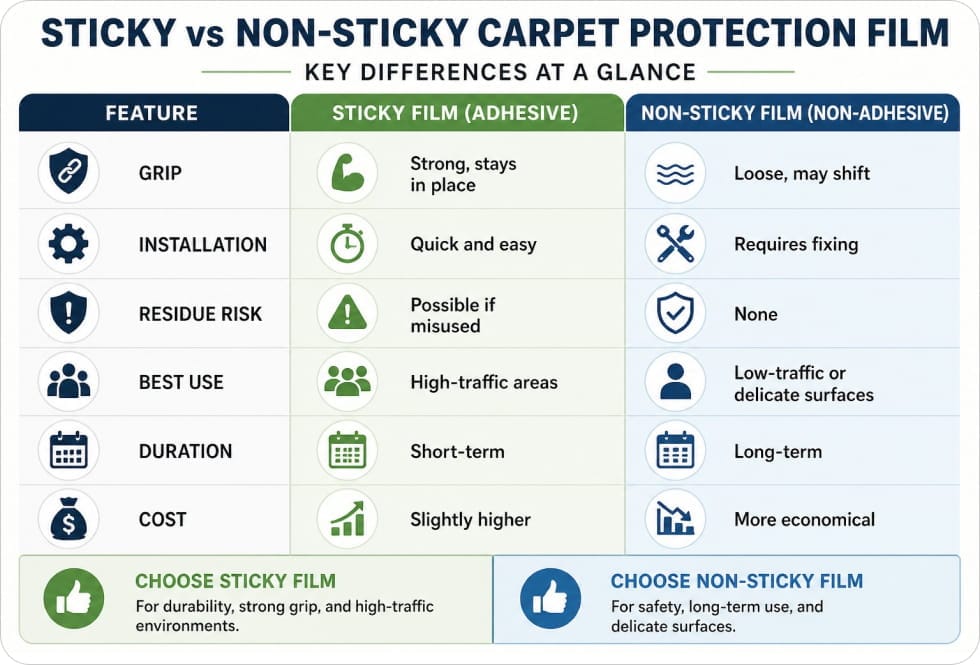
- Choose sticky (self-adhesive) film for durability, grip, and high-traffic environments
- Choose non-sticky film for safety, long-term use, and delicate surfaces
For most construction and renovation projects, self adhesive carpet film is the preferred option due to its reliability and ease of use. However, for sensitive applications, non-adhesive alternatives are the safer choice.
Conclusion
Investing in the right carpet masking film can make a significant difference in maintaining cleanliness, reducing damage, and saving costs. Whether you opt for adhesive or non-adhesive, understanding your project requirements is key.
At Ecoplast, a wide range of temporary carpet protection solutions are designed to meet diverse industry needs ensuring your carpets stay as good as new, no matter the challenge.
👉 Contact us today for a free consultation or custom quote!
📧 Email: [email protected]
🌐 Website: www.ecoplastindia.com