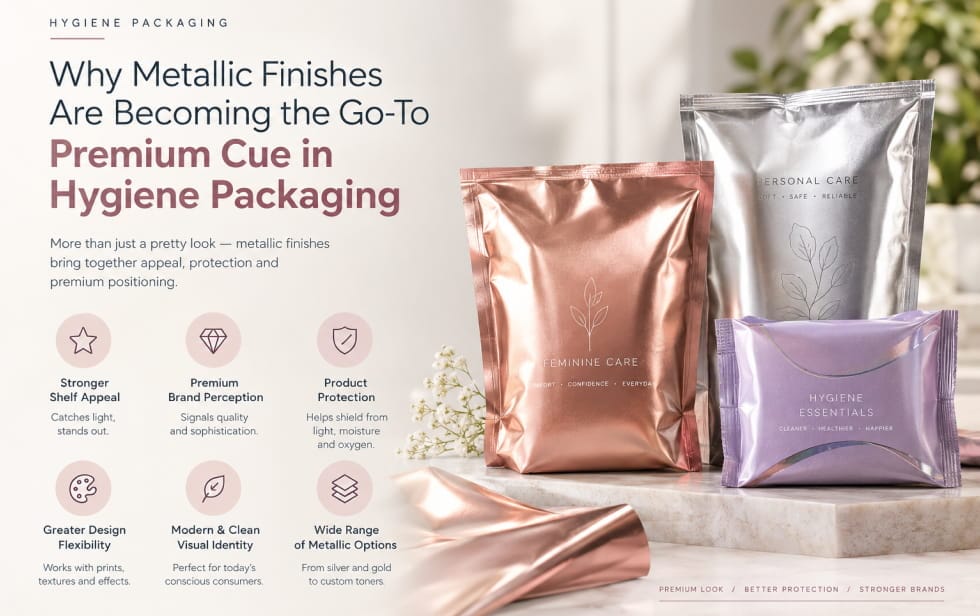
Packaging in the hygiene industry has traditionally focused on protection, convenience, and product safety. But as the category becomes more competitive, appearance is playing a bigger role in how products are perceived.
Consumers often encounter several similar products at the same time. A distinctive pack can therefore make a product easier to notice and can influence the way its quality is perceived. This is one reason metallic effects are becoming more common across hygiene and personal care packaging.
For brands exploring Metallic Printing as a Premium Finish in Hygiene Packaging, the appeal is not limited to appearance. Depending on the material and construction, metallized structures can also support protection from light, moisture, and oxygen. This creates an opportunity to bring visual differentiation and functional performance together.
What’s Driving the Shift Toward Metallic Finishes in Hygiene Packaging
The move toward metallic finishes reflects a broader change in packaging design. Hygiene products are no longer expected to look purely functional. Brands are increasingly using colour, texture, gloss, and reflective elements to build a stronger identity.
This is especially visible in feminine hygiene products, where packaging needs to feel clean and contemporary while standing out among competing products.
Some of the factors contributing to this shift include:
- Demand for more sophisticated product presentation
- Stronger competition on retail shelves
- Changing feminine hygiene packaging trends
- Greater focus on visual brand identity
- Growth of flexible and multilayer packaging structures
- Interest in finishes that combine appearance with functional properties
Metallic effects can also be used selectively. A silver logo, metallic pattern, or highlighted section can create contrast without making the entire pack highly reflective.
What Is Metallic Printing as a Premium Finish in Hygiene Packaging?
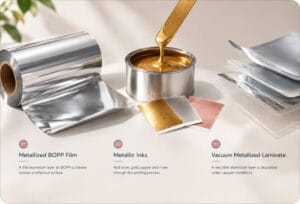
Metallic Printing as a Premium Finish in Hygiene Packaging involves using metallic inks, metallized substrates, or specially designed laminate structures to create a reflective appearance.
One method involves printing metallic inks to produce shades such as silver, gold, or copper. Another involves a metallized polymer film. For example, metallized BOPP film uses a thin aluminium layer on a BOPP substrate to create its characteristic reflective surface.
The same visual effect can also be incorporated into multilayer structures through vacuum metallized laminates. In such structures, a very thin aluminium layer is deposited onto a film under vacuum conditions.
The appropriate approach depends on the required appearance, printing process, barrier requirements, sealing properties, and overall packaging construction.
Why Metallic Finishes Matter for Hygiene Packaging
A hygiene pack has to do more than attract attention. It needs to remain intact during manufacturing, transportation, storage, and handling.
A suitable material structure can help address these requirements while also contributing to the visual identity of the product.
1. Improved Shelf Visibility
Reflective surfaces respond strongly to surrounding light, making selected packaging elements easier to notice. This can be particularly useful in crowded retail environments.
2. Stronger Brand Expression
Gold, silver, and other metallic tones can give a product a more sophisticated appearance. When used carefully, they can communicate quality without making the design look excessive.
3. Potential Functional Benefits
The metallic layer can have a functional role in addition to its appearance. Depending on the structure, it may contribute to protection against light, moisture, and oxygen.
This makes the barrier properties of metallized film an important consideration when selecting materials for specific applications.
4. More Design Flexibility
Metallic surfaces can be combined with different colours, coatings, printing techniques, and laminate layers. Designers can therefore create contrast between reflective and non-reflective areas within the same pack.
Where Are Metallic Finishes Used?
Metallic effects can be considered across several hygiene and personal care applications, including:
- Feminine hygiene product packaging
- Sanitary pad and pantyliner packs
- Personal care sachets
- Hygiene product pouches
- Beauty and wellness packaging
- Premium and limited-edition packs
Brands that want the appearance of traditional foil can also explore a foil-effect packaging finish. This can provide a visually rich surface while retaining the flexibility associated with modern film-based packaging, depending on the selected structure.
For applications requiring protection as well as presentation, a moisture and oxygen barrier film can be considered as part of the overall material construction.
Key Properties to Consider When Selecting a Metallic Finish
The visual effect is only one part of the decision. The material also needs to work with printing, lamination, sealing, and converting requirements.
1. Barrier Performance
Metallized structures can contribute to protection against environmental factors such as light, moisture, and oxygen. However, the actual performance depends on the complete structure and the quality of the metallized layer.
2. Printing Compatibility
The surface needs to support the selected printing technology. Gravure printing on metallized substrate requires suitable inks and process conditions to achieve consistent colour, graphics, and registration.
3. Surface Appearance
Different applications call for different levels of reflectivity. A bright metallic surface may work well for one brand, while another may prefer a softer reflective/lustre laminate finish.
4. Lamination Performance
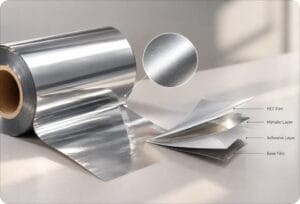
Metallic films can form part of multilayer constructions where different layers provide specific functions. The final structure may need to balance appearance, strength, sealing, adhesion, and machinability.
5. Overall Finish Selection
The choice between matte vs metallic packaging finish depends on the brand’s visual language.
Matte surfaces tend to create a quieter and more understated impression, while metallic surfaces offer stronger reflectivity. Combining both can also produce an effective result, such as metallic details against a matte background.
How Metallic Finishes Fit into Modern Hygiene Packaging
The packaging industry is increasingly moving toward solutions where design and technical performance are considered together.
For hygiene products, this means choosing materials that not only look appropriate but can also perform throughout production, distribution, and storage. A reflective layer may contribute to the visual identity, while the rest of the construction determines properties such as sealing, strength, barrier performance, and machinability.
This makes material selection an important part of packaging development. The right solution depends on the product, packaging format, production process, and desired appearance.
Ecoplast and Film Solutions for Hygiene Packaging
Ecoplast Ltd. serves the hygiene segment with film solutions designed for demanding packaging applications. Its portfolio includes multilayer polyolefin and co-polymer films, along with lamination and specialty film technologies.
One relevant solution is ECOGEN™, a range of lamination PE films developed for FMCG applications including hygiene, personal care, and cosmetics. These films can be combined with substrates such as PET, BOPP, aluminium foil, and paper depending on the required packaging structure.
Ecoplast also offers metallized silver options within its specialty surface protection film range. These films use a thin aluminium layer to create a glossy metallic appearance while providing protection against factors such as UV radiation and moisture permeability.
The broader approach is focused on developing film structures according to application requirements, giving manufacturers and converters flexibility when balancing appearance, processing, and performance.
Why Choose Ecoplast?
Choosing a film for modern packaging involves more than selecting a particular appearance. Factors such as substrate compatibility, lamination, printing, sealing, processing, and end-use conditions all need to be considered.
Ecoplast’s experience with multilayer film technology allows these requirements to be considered as part of the overall structure. Its focus on customised solutions and technical support can help businesses evaluate suitable materials for different packaging applications.
For hygiene packaging manufacturers looking to explore reflective finishes without losing sight of technical requirements, this combination of film expertise and application-focused development can be valuable.
FAQs
What is Metallic Printing as a Premium Finish in Hygiene Packaging?
It refers to using metallic inks, metallized films, or laminate structures to create a reflective appearance while meeting the functional requirements of the packaging.
What is a metallized BOPP film?
It is BOPP film coated with a very thin metallic layer, generally aluminium. The coating provides a reflective appearance and can contribute to barrier performance depending on the final structure.
Can metallized films provide moisture and oxygen protection?
They can contribute to moisture and oxygen barrier performance, although the level of protection depends on the complete packaging structure, materials, and manufacturing process.
Which is better, a matte or metallic packaging finish?
Neither is universally better. Matte creates a more subtle appearance, while metallic provides stronger reflectivity. The right option depends on the brand identity, application, and desired shelf impact.
How is a foil-effect packaging finish created?
It can be achieved through metallic inks, metallized films, coatings, or laminate structures. The appropriate method depends on the required appearance and technical specifications.
Conclusion
Metallic finishes are helping hygiene brands balance premium visual appeal with functional packaging performance. As Flexible Packaging continues to evolve, the right combination of Multilayer Films, Lamination Films, and suitable substrates can support both appearance and protection.
With expertise across Hygiene, Personal Care, and FMCG Packaging, Ecoplast Ltd. develops film solutions suited to different packaging requirements, helping manufacturers achieve the right balance of design, performance, and machinability.
Upgrade your hygiene packaging with Ecoplast Ltd.
👉 Contact us today for a free consultation or custom quote!
📧 Email: [email protected]
🌐 Website: www.ecoplastindia.com