The interior of a modern vehicle is designed to deliver more than just visual appeal. Every component contributes to passenger comfort, insulation and the overall driving experience. One such component is the automotive headliner, also known as a car headliner or vehicle roof liner. It is the finished covering fitted to the inside of a vehicle’s roof.
A modern headliner is a multi-layered structure made using fabrics, foam, supporting substrates and specialised bonding materials. Each layer serves a specific purpose, from enhancing interior aesthetics to supporting acoustic absorption and thermal insulation.
Ecoplast India, a manufacturer of specialised polyethylene and polyolefin-based films, offers dedicated solutions for automotive headliner applications through its ECOPRIME® 101-A1 and ECOPRIME® 101-A2 product range. These films are designed to bond compatible fabrics, foams and fibres under controlled heat and pressure.
Understanding the materials, construction and bonding technology behind automotive headliners helps manufacturers select the right materials for reliable vehicle interior applications.
1. What Is an Automotive Headliner?
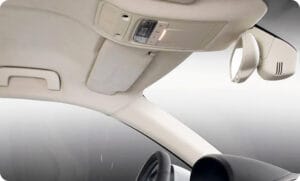
An automotive headliner is the interior covering installed beneath the metal roof of a vehicle. It provides a finished appearance to the cabin while concealing wiring, structural components and other fittings located above the passengers.
Also called a vehicle roof liner or interior headliner, this component performs several important functions:
- Interior aesthetics: Creates a clean, smooth and attractive finish inside the vehicle.
- Acoustic absorption: Helps absorb sound and reduce unwanted noise within the cabin.
- Thermal insulation: Contributes to reducing heat transfer through the vehicle roof.
- Passenger comfort: Provides a finished, cushioned surface above the seating area.
- Component integration: Accommodates accessories such as overhead lights, grab handles and sun visors.
Modern automotive headliners are designed to balance appearance, durability, lightweight construction and functional performance.
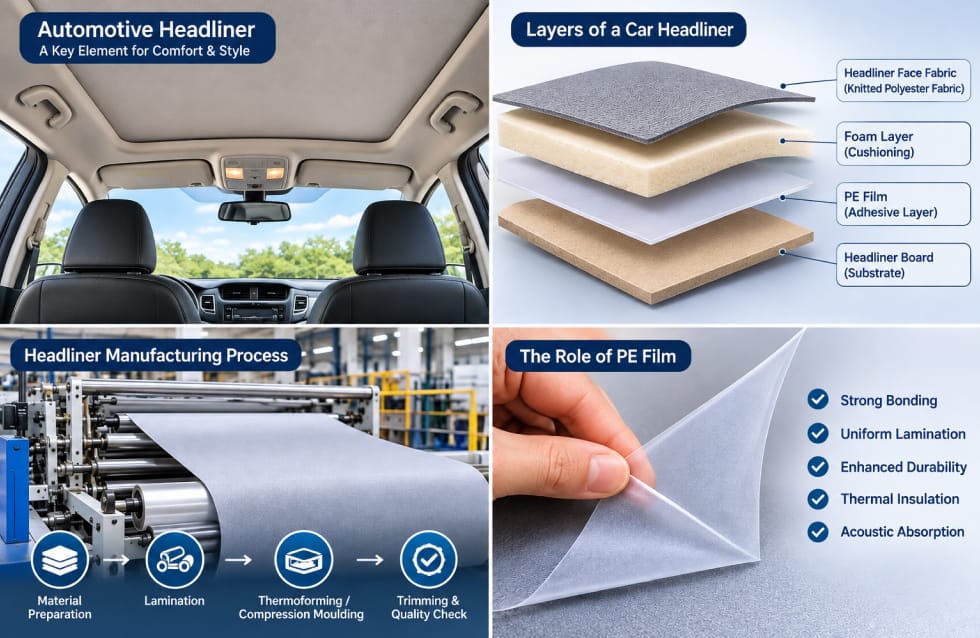
Understanding the Different Layers of a Car Headliner
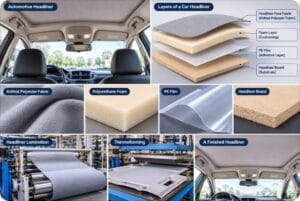
A car headliner generally consists of multiple layers of materials combined to create a single structure. The exact construction varies depending on the vehicle manufacturer and application requirements.
A. Headliner Face Fabric
The headliner face fabric is the visible outer layer of the roof lining. It determines the colour, texture and overall appearance of the vehicle’s interior.
Knitted polyester fabric, particularly knitted tricot fabric, is commonly used because of its flexibility, soft texture and suitability for automotive interior applications.
Important characteristics include:
- Smooth and uniform surface appearance.
- Flexibility for adapting to curved roof profiles.
- Compatibility with foam and backing materials.
- Suitable dimensional stability.
- Resistance to everyday wear.
The face fabric must maintain its appearance while fitting the contours of the vehicle roof.
B. Foam or Cushioning Layer
A cushioning layer, commonly made from polyurethane foam, is positioned beneath the face fabric.
It provides softness, improves the surface finish and contributes to the acoustic and thermal properties of the headliner assembly.
The foam must also maintain suitable compatibility with the other layers to support consistent bonding and long-term performance.
C. Headliner Board or Substrate
The headliner board provides structural support and maintains the shape of the vehicle roof lining.
Depending on the application, manufacturers may use fibreglass composites, polyurethane-based materials, polyester nonwovens or other engineered substrates.
The board must be lightweight while providing sufficient rigidity and dimensional stability to fit the vehicle’s roof structure.
D. Adhesive or Bonding Layer
The bonding layer connects the different materials and helps create a unified headliner structure.
Specialised polyolefin-based films can be positioned between compatible materials and activated using heat and pressure.
A consistent bonding layer helps maintain the connection between the fabric, foam and supporting substrate during manufacturing and vehicle use.
Materials Commonly Used in Automotive Headliner Manufacturing
The selection of materials directly influences the appearance, weight, flexibility and performance of an automotive headliner.
Some commonly used materials include:
- Knitted Polyester Fabric: Used as the decorative face material because of its flexibility, texture and appearance.
- Polyurethane Foam: Provides cushioning and contributes to insulation and acoustic properties.
- Polyester and Polypropylene Nonwovens: Used in supporting layers and composite structures.
- Fibreglass Composites: Provide structural strength and dimensional stability.
- Polyolefin-Based Films: Used for bonding compatible fabrics, foams and fibres during the lamination process.
Each material must be selected according to the vehicle design, manufacturing requirements and expected performance of the finished assembly.
How Is an Automotive Headliner Manufactured?
Automotive headliner manufacturing involves several stages, including material preparation, lamination, forming and quality inspection.
Step 1: Material Preparation
The required materials, such as headliner face fabric, foam, supporting substrates and bonding films, are selected according to the application specifications.
Proper material compatibility is important to achieve the desired bonding and finished quality.
Step 2: Headliner Lamination
Headliner lamination involves joining different material layers to create a unified composite structure.
Specialised adhesive films are placed between compatible substrates. Heat and pressure activate the film, allowing the materials to bond together.
Uniform bonding is important for maintaining consistent quality across the headliner surface.
Step 3: Thermoforming
Thermoforming is a process in which prepared materials are heated and shaped into the required three-dimensional profile.
The material assembly is placed into a specially designed mould, where controlled temperature and forming conditions help achieve the desired vehicle roof shape.
Step 4: Compression Moulding
Compression moulding uses heat and pressure to shape and consolidate materials inside a mould.
The prepared headliner material stack is placed into the mould and compressed under controlled conditions to achieve the required shape, thickness and structural characteristics.
The manufacturing process depends on the material combination, headliner design and production specifications.
Step 5: Trimming and Quality Inspection
After forming, excess material is trimmed, and openings are created for accessories such as overhead lights, handles and sun visors.
The finished headliner is checked for surface appearance, dimensional accuracy, material bonding and other application-specific quality requirements.
The Role of PE Film in Automotive Headliner Lamination
While fabric, foam and supporting substrates determine the structure of a headliner, the bonding material plays an equally important role in bringing these layers together.
Polyethylene and other polyolefin-based films are used in automotive applications to bond compatible materials through controlled heat and pressure.
Ecoplast’s ECOPRIME® 101-A1 and ECOPRIME® 101-A2 are specialised polypropylene and polyethylene (PP+PE) based films developed for automotive headliner applications.
These films are designed to bond materials used in automotive headliner construction and act as an additional layer that helps protect the inner material.
Their key application benefits include:
Strong Bonding Performance: The films function as bonding materials for joining compatible fabrics, foams and fibres under heat and pressure.
Enhanced Durability: By creating a bonded material structure and acting as an additional protective layer, the films support the durability of automotive interior assemblies.
Consistent Lamination: Film-based bonding helps manufacturers achieve a more integrated structure when appropriate processing conditions are maintained.
Versatile Applications: Beyond headliners, these films are relevant to automotive applications such as door liners, trims, carpets and seating upholstery.
Heat-Activated Bonding: Their activation under heat and pressure makes them suitable for compatible industrial lamination processes.
Selecting the appropriate film and maintaining suitable processing conditions are important for achieving reliable bonding across the finished headliner assembly.
Why Does a Car Headliner Start Sagging?
A sagging headliner is a common problem in older vehicles. It occurs when the visible fabric starts separating from the underlying foam or supporting structure, causing the roof lining to droop.
Some common contributing factors include:
- Deterioration of foam over time.
- Ageing or weakening of the bonding material.
- Prolonged exposure to high cabin temperatures.
- Humidity and environmental conditions.
- Inadequate bonding or material compatibility.
Using suitable bonding materials and maintaining proper lamination conditions can help reduce the risk of layer separation.
However, preventing a sagging headliner also depends on the quality of the fabric, foam, substrate and overall manufacturing process.
How Automotive Headliners Improve Vehicle Cabin Comfort
A well-designed vehicle roof liner contributes to passenger comfort and the overall interior experience.
Acoustic Absorption: Foam and porous nonwoven materials help absorb sound and reduce unwanted cabin noise.
Thermal Insulation: Multiple material layers contribute to limiting heat transfer through the vehicle roof.
Lightweight Construction: Modern composite materials help achieve the required structural properties without adding unnecessary weight.
Interior Appearance: The headliner face fabric provides a finished look that complements the vehicle’s seats, dashboard and other interior components.
Together, these features make automotive headliners an important part of modern vehicle interior engineering.
Choosing the Right Film for Automotive Headliner Applications
For automotive component manufacturers, selecting the right bonding film is an important part of the production process.
Some key considerations include:
- Compatibility with headliner fabric, foam and supporting substrates.
- Required bonding strength.
- Film activation temperature.
- Lamination speed and production conditions.
- Resistance to expected environmental conditions.
- Consistency in material quality and performance.
Evaluating these factors helps manufacturers select suitable film solutions for their specific headliner construction and production requirements.
FAQs
1. What is an automotive headliner?
An automotive headliner is the interior covering attached to the underside of a vehicle’s roof. It improves cabin aesthetics, provides cushioning and contributes to acoustic absorption and thermal insulation.
2. What materials are used in a car headliner?
A car headliner typically consists of knitted polyester fabric, polyurethane foam, nonwoven materials, a supporting headliner board and specialised adhesive films. The material combination depends on the vehicle design and manufacturing requirements.
3. What is the purpose of PE film in automotive headliners?
PE and polyolefin-based films are used as bonding layers to join compatible fabrics, foams and fibres. They help create an integrated headliner structure through heat-based lamination.
4. What is headliner lamination?
Headliner lamination is the process of bonding different material layers, such as face fabric, foam and supporting substrates, using heat, pressure and suitable bonding materials.
5. What is the difference between thermoforming and compression moulding?
Thermoforming involves heating materials and shaping them into a required profile. Compression moulding uses controlled heat and pressure inside a mould to shape and consolidate the material assembly.
6. Why does a vehicle roof liner start sagging?
A sagging headliner can occur due to foam deterioration, ageing adhesives, prolonged exposure to heat, humidity or inadequate bonding between material layers.
7. How does an automotive headliner improve cabin comfort?
An automotive headliner contributes to passenger comfort by supporting acoustic absorption, thermal insulation and cushioning while providing a smooth and finished interior appearance.
8. Which Ecoplast products are used for automotive headliner applications?
Ecoplast offers ECOPRIME® 101-A1 and ECOPRIME® 101-A2, specialised PP+PE-based polyolefin films designed for automotive headliner applications. These films help bond compatible fabrics, foams and fibres under controlled heat and pressure.
Conclusion
An automotive headliner is much more than an interior fabric covering. It is an engineered multi-layered component that contributes to vehicle aesthetics, acoustic absorption, thermal insulation and passenger comfort.
From knitted polyester fabric and foam to the headliner board and specialised bonding films, every layer plays an important role in the finished vehicle roof lining. Processes such as thermoforming, compression moulding and headliner lamination bring these materials together to create a functional and well-finished assembly.
As automotive interior manufacturing continues to evolve, reliable bonding materials remain essential for producing consistent and durable headliner structures.
With its ECOPRIME® 101-A1 and ECOPRIME® 101-A2 polyolefin-based films, Ecoplast provides specialised film solutions for automotive headliner applications, supporting the bonding of compatible fabrics, foams and fibres under heat and pressure.
Looking for specialised film solutions for automotive headliner manufacturing?
Explore Ecoplast’s automotive headliner film range >>
👉 Contact us today for a free consultation or custom quote!
📧 Email: [email protected]
🌐 Website: www.ecoplastindia.com