Glass surfaces are widely used in modern buildings, commercial spaces, offices and residential projects. During construction, transportation, installation and renovation, these surfaces are exposed to dust, paint, cement splashes, scratches and other potential damage. To prevent such issues, contractors and manufacturers often use protective films for temporary surface protection.
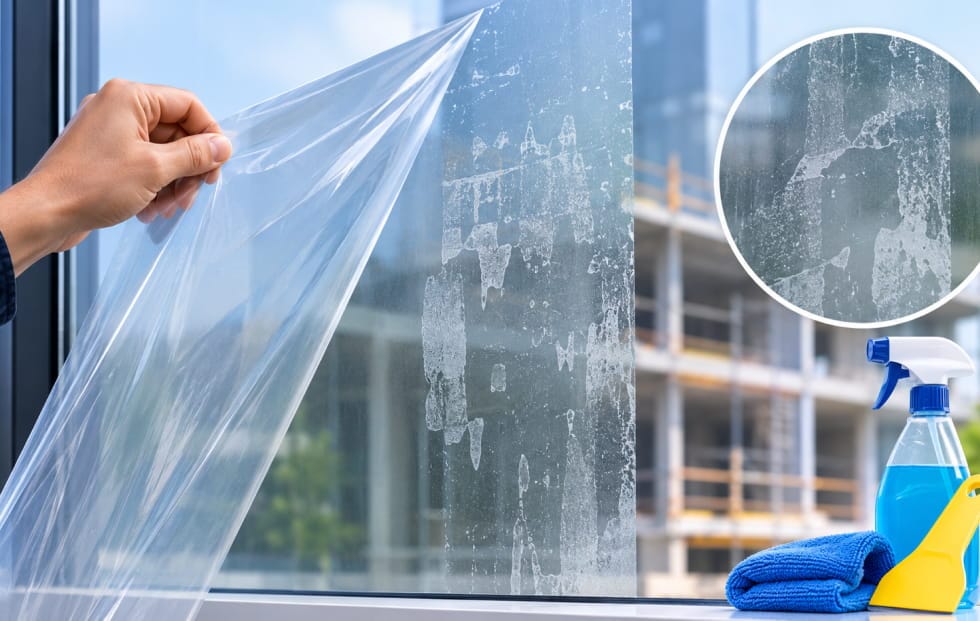
However, one common problem occurs when the protective film is removed: adhesive residue on glass. Instead of leaving behind a clean surface, some films leave sticky marks, glue deposits or visible adhesive patches that require additional cleaning.
This issue can increase maintenance costs, delay project handovers and affect the final appearance of glass installations.
Ecoplast India, a manufacturer of polyethylene and specialty surface protection films, offers ECOPROTECT® glass protection films designed to protect glass surfaces during construction and renovation activities while supporting clean, residue-free removal.
In this blog, we explore the common causes of adhesive residue on glass, how to remove it safely and the importance of choosing the right protective film to prevent adhesive transfer.
What Causes Adhesive Residue on Glass After Removing Protective Film?
Adhesive residue occurs when part of the adhesive layer remains attached to the glass after the protective film is peeled away. This is also known as adhesive transfer or adhesive ghosting.
Several factors can contribute to this problem.
A. Prolonged Exposure to Sunlight and UV Radiation
Protective films used on construction sites are often exposed to direct sunlight for extended periods. Ultraviolet (UV) radiation can gradually affect the adhesive properties of certain films.
Over time, the adhesive may become harder to remove or leave behind sticky deposits when the film is peeled away.
B. High Temperatures
Glass surfaces exposed to strong sunlight can reach elevated temperatures. Heat can affect adhesive performance, potentially causing the adhesive to soften, migrate or become difficult to remove.
This is particularly important for glass protection films used on exterior windows, building facades and large commercial glazing installations.
C. Leaving the Film Applied for Too Long
Every protective film is designed for a specific application and recommended service period.
When a film remains on the surface beyond its intended usage period, environmental exposure and adhesive ageing can increase the possibility of residue formation.
Following the manufacturer’s recommended removal timeline is therefore important.
D. Incorrect Adhesive Formulation
The quality and formulation of the adhesive directly influence how a protective film performs.
An unsuitable adhesive may develop excessive bonding strength over time or may not release cleanly from the glass surface.
Selecting a film with an adhesive system specifically designed for glass protection helps reduce this risk.
E. Improper Film Removal
Removing the protective film too quickly, pulling it at an inconsistent angle or working under unsuitable temperature conditions can sometimes contribute to adhesive transfer.
Using the recommended removal technique helps maintain better control during the process.
What Is Adhesive Ghosting on Glass?
Adhesive ghosting refers to the visible marks, patches or uneven appearance left on a surface after removing a protective film.
Unlike ordinary dust or dirt, adhesive ghosting may remain even after wiping the glass with a regular cleaning cloth.
Common signs include:
- Sticky residue or glue patches.
- Uneven or hazy marks on the glass.
- Visible adhesive patterns under sunlight.
- Dust and dirt sticking to previously protected areas.
- Additional cleaning requirements before installation or handover.
Adhesive ghosting is particularly problematic in commercial buildings, glass facades, office partitions and large window installations, where surface clarity and appearance are important.

How to Remove Adhesive Residue from Glass Safely
If a protective film leaves residue behind, the cleaning method should be selected carefully to avoid scratching or damaging the glass.
Here are some practical steps.
Step 1: Remove Loose Adhesive
Start by gently wiping the surface with a soft microfibre cloth to remove loose adhesive particles and dust.
Avoid using rough materials that may scratch the glass.
Step 2: Apply Warm Water
Use warm water with a mild glass-compatible cleaning solution to soften the remaining adhesive.
Allow it to sit briefly before gently wiping the affected area.
Step 3: Use a Glass-Safe Adhesive Remover
For stubborn sticky residue on glass surfaces, use an adhesive remover specifically approved for the glass type and any coatings present.
Always test the product on a small, inconspicuous area before applying it across the entire surface.
Step 4: Use a Soft Plastic Scraper
If adhesive deposits remain, a suitable plastic scraper can help lift them without unnecessarily scratching the surface.
Avoid metal blades and abrasive scrubbers, particularly on coated, treated or speciality glass.
Step 5: Clean and Dry the Surface
Once the residue has been removed, clean the glass using an appropriate glass cleaner and a soft microfibre cloth.
For coated, tinted or Low-E glass, follow the glass manufacturer’s cleaning recommendations before using any chemical remover or scraping tool.
Important: Prevention is generally more efficient than removing adhesive residue after installation. Choosing the right protective film can significantly reduce additional cleaning work.
How to Prevent Protective Film from Leaving Adhesive Residue
Preventing adhesive residue starts with selecting a protective film that matches the application and expected exposure conditions.
Here are some important considerations.
A. Choose Application-Specific Protective Films
Not every protective film is suitable for every glass surface.
A film designed for metal, plastic or another substrate may not provide the same removal performance on glass.
Choose a glass protection film specifically developed for glass surfaces and the intended duration of use.
B. Check UV and Weather Resistance
For construction sites and outdoor installations, protective films may remain exposed to sunlight, rain and changing temperatures.
Selecting films with suitable UV and weather resistance helps maintain their performance during the intended protection period.
C. Follow Recommended Application and Removal Periods
Protective films should be removed according to the manufacturer’s recommendations.
Avoid leaving them on glass longer than their specified service life, especially in outdoor environments.
D. Maintain Proper Application Conditions
Before applying the film, ensure that the glass surface is clean, dry and free from dust, oil and other contaminants.
Proper application helps achieve uniform contact and consistent adhesion.
E. Select Films Designed for Residue-Free Removal
One of the most important considerations is the adhesive formulation.
A well-designed glass protection film should provide sufficient adhesion during use while allowing smooth removal without leaving sticky marks or adhesive deposits.
IMG
Why Glass Protection Film Is Important on Construction Sites
Construction and renovation activities expose glass surfaces to several types of damage.
During painting, plastering, facade installation, and interior finishing, glass can come into contact with paint, dust, cement particles, oils and construction debris.
Glass protection film acts as a temporary protective barrier during these activities.
Its key advantages include:
- Scratch and Surface Protection: Helps prevent scratches, abrasions and mechanical damage during construction and handling.
- Protection Against Contamination: Helps protect glass from paint splashes, dust, oils and other construction-related contaminants.
- Easy Application: Self-adhesive films can be applied directly to suitable glass surfaces for temporary protection.
- Weather Resistance: Suitable outdoor grades help protect glass during exposure to changing weather conditions.
- Clean Removal: Application-specific films designed for residue-free removal help reduce post-construction cleaning requirements.
Using the right glass protection film can help contractors maintain surface quality while improving efficiency during project execution.
How Ecoplast’s ECOPROTECT® Glass Protection Films Help Prevent Adhesive Residue
Selecting a reliable protective film manufacturer is important when glass surfaces need temporary protection during construction, transportation and installation.
Ecoplast India offers ECOPROTECT® glass protection films, developed specifically to protect glass surfaces against paint, dust, debris and mechanical damage.
These self-adhesive films are designed for both indoor and outdoor applications, offering practical surface protection during construction and renovation activities.
Some important features include:
- Residue-Free Removal: Designed to peel away smoothly without leaving adhesive marks or tearing.
- Easy Application: Can be applied manually for quick and convenient surface protection.
- Weather and UV Resistance: Available with UV resistance of up to 3–12 months, depending on the film specification.
- Surface Protection: Helps protect glass against paint, thinners, oils, water and construction-related contaminants.
- Indoor and Outdoor Applications: Suitable film grades are available for different glass protection requirements.
By combining appropriate adhesive formulation with application-specific film design, ECOPROTECT® helps address common challenges associated with protective film removal.
For contractors, builders, facade manufacturers and glass processors, choosing the right protective film can help reduce cleaning requirements and support smoother project completion.
How to Select the Right Residue-Free Protection Film
Before choosing a glass protection film, consider the following factors:
- Glass Compatibility: Ensure the film is suitable for the specific glass surface and any coatings present.
- Adhesion Performance: Select an adhesive strength appropriate for the surface and application.
- UV Resistance: Consider the expected sunlight exposure and outdoor protection period.
- Removal Performance: Look for films designed for clean and residue-free removal.
- Application Duration: Match the film’s service life to the expected construction or renovation timeline.
- Manufacturer Reliability: Choose a manufacturer with experience in surface protection film technology and application-specific solutions.
A carefully selected protective film helps maintain glass quality throughout construction while reducing the possibility of adhesive transfer after removal.
Conclusion
Adhesive residue on glass after removing protective film is a common challenge in construction, renovation and glass installation projects. Factors such as UV exposure, high temperatures, prolonged application, unsuitable adhesive formulations and improper removal techniques can contribute to sticky residue and adhesive ghosting.
Although glass-safe cleaning methods can help remove existing residue, preventing the problem through proper film selection is a more efficient approach.
Ecoplast India’s ECOPROTECT® glass protection films are designed to provide temporary surface protection with easy application and residue-free removal. They help protect glass against construction-related contaminants and mechanical damage while supporting cleaner project handovers.
Choosing the right glass protection film is not just about protecting the surface during construction. It is also about ensuring that the glass remains clean, clear and ready for its final application.
Looking for reliable, residue-free glass protection film solutions?
Explore Ecoplast’s glass protection film range >>
👉 Contact us today for a free consultation or custom quote!
📧 Email: [email protected]
🌐 Website: www.ecoplastindia.com