Have you ever wondered how your favourite coffee retains its aroma for months, how chips stay crisp, or how pharmaceutical products remain effective throughout their shelf life?
The answer lies far beyond the attractive packaging design. Hidden within the package is a highly engineered material known as a multi-layer barrier film, a critical component that protects products from oxygen, moisture, contaminants, and other environmental factors.
In today’s competitive packaging industry, businesses need more than just a plastic film. They need packaging that extends shelf life, maintains product quality, reduces waste, and performs efficiently during manufacturing and transportation. This is where multi-layer barrier film technology has transformed modern packaging.
At Ecoplast Ltd., decades of expertise in manufacturing multilayer co-extruded polyethylene films have enabled industries across food, pharmaceutical, hygiene, industrial, and specialty packaging to benefit from advanced barrier solutions engineered for performance, consistency, and reliability.
Let’s take a closer look at the science behind these remarkable films and why they have become indispensable in modern packaging.
Why Oxygen and Moisture Are Packaging’s Biggest Challenges
Every packaged product is constantly exposed to external environmental conditions.
Among all the factors affecting product quality, oxygen and moisture are the most damaging.
Oxygen exposure can:
- Oxidize food products
- Destroy natural flavours and aromas
- Cause discoloration
- Reduce nutritional value
- Shorten shelf life
Similarly, moisture can:
- Make snacks lose their crunch
- Cause powdered products to clump
- Encourage bacterial and fungal growth
- Affect pharmaceutical stability
- Damage industrial products
Preventing these issues requires advanced food packaging barrier technology capable of creating an effective shield between the product and the outside environment.
What Makes Multi-Layer Barrier Films Different?
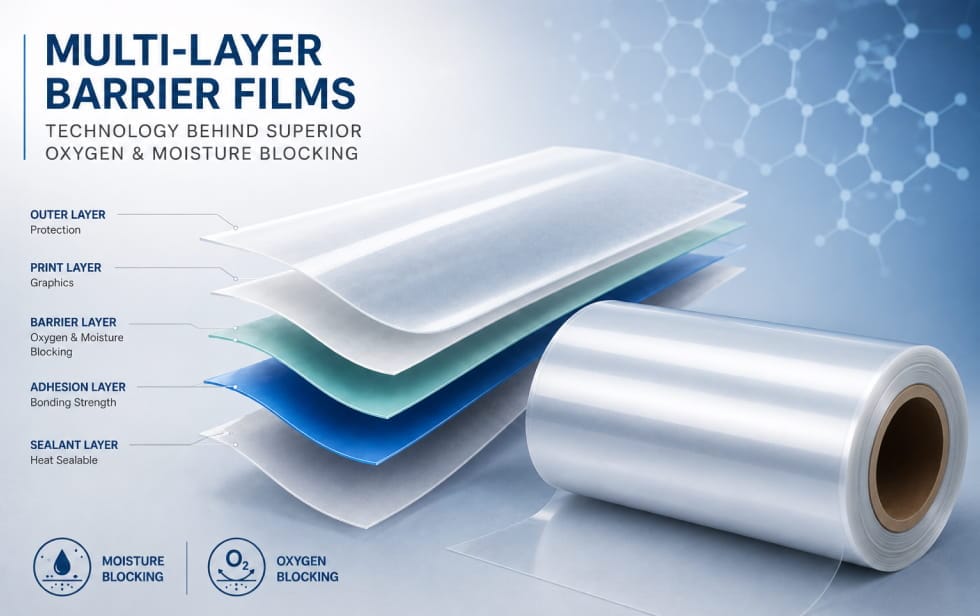
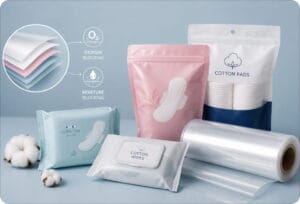
Unlike conventional single-layer plastic films, barrier films consist of multiple polymer layers, each performing a specific function.
Instead of relying on one material to deliver every property, manufacturers combine different polymers into a single engineered structure.
Each layer contributes something unique:
- Barrier protection
- Mechanical strength
- Sealability
- Flexibility
- Printability
- Chemical resistance
- Processability
This engineered construction is what defines multi-layer barrier film technology, allowing manufacturers to achieve performance levels that single-layer films simply cannot deliver.
The Science Behind Co-Extrusion Film Manufacturing
One of the biggest breakthroughs in flexible packaging has been co-extrusion film manufacturing.
Rather than producing individual films separately and laminating them later, co-extrusion combines multiple molten polymer layers simultaneously through a specially designed die.
The result is one integrated film structure with exceptional bonding between layers.
This manufacturing process offers several advantages:
- Excellent layer uniformity
- Better structural integrity
- Reduced production waste
- Improved manufacturing efficiency
- Consistent barrier performance
- Precise thickness control
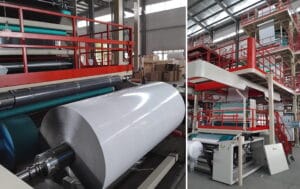
At Ecoplast, advanced blown film extrusion technology enables the production of high-quality multilayer co-extruded polyethylene films tailored to diverse industrial applications. By maintaining stringent quality controls throughout the manufacturing process, Ecoplast delivers films with reliable performance and consistent properties across every production batch.
Understanding Oxygen Barrier Film Layers
One of the primary functions of barrier packaging is preventing oxygen from entering the package.
Modern oxygen barrier film layers are carefully engineered using specialized materials that significantly reduce oxygen transmission rates.
Depending on product requirements, these barrier layers help:
- Preserve freshness
- Protect sensitive ingredients
- Maintain flavour and aroma
- Increase shelf life
- Improve product stability
For products such as dairy, processed foods, coffee, ready-to-eat meals, frozen foods, and pharmaceuticals, effective oxygen barriers are essential for maintaining product quality throughout storage and distribution.
Moisture Barrier Film Composition: Keeping Products Fresh
While oxygen protection is essential, controlling moisture is equally important.
The moisture barrier film composition of a package determines how effectively it prevents water vapour from entering or leaving the product.
Different polymer combinations are selected depending on the packaging application, ensuring the right balance between barrier protection, flexibility, and durability.
Effective moisture barriers are particularly valuable for:
- Snack foods
- Bakery products
- Spices
- Powdered beverages
- Nutraceuticals
- Pharmaceutical packaging
Maintaining the correct moisture level not only preserves product quality but also enhances consumer satisfaction.
High-Barrier Film Structures Designed for Performance
Every product has unique packaging requirements.
Some require superior oxygen protection.
Others demand puncture resistance or enhanced sealing performance.
This is why high-barrier film structures are designed with multiple functional layers working together to achieve optimal performance.
Depending on the application, multilayer structures can provide:
- Excellent puncture resistance
- Improved tensile strength
- High seal integrity
- Better dimensional stability
- Enhanced machinability
- Reliable product protection
At Ecoplast, customized multilayer film solutions are developed to meet the evolving demands of industries requiring dependable packaging performance across various processing conditions.
Co-Extruded Films vs. Laminated Barrier Films
Barrier packaging is commonly manufactured using either co-extrusion or lamination.
While laminated barrier films combine separate films using adhesives, co-extruded films integrate multiple layers during a single manufacturing process.
Both technologies have their advantages depending on the application.
Co-extruded films offer:
- Strong interlayer bonding
- Better manufacturing efficiency
- Uniform layer distribution
- Reduced material usage
Laminated films provide:
- Greater material flexibility
- Premium printing performance
- Specialized barrier combinations
- Custom packaging aesthetics
Selecting the right solution depends on product characteristics, packaging requirements, and processing methods.
Why Film Layer Thickness Matters
A common misconception is that thicker packaging automatically provides better protection.
In reality, the film layer thickness impact depends on engineering rather than simply adding more material.
Packaging engineers carefully optimize each layer to achieve maximum barrier performance while maintaining flexibility and cost efficiency.
Proper thickness optimization helps deliver:
- Superior oxygen resistance
- Better moisture control
- Improved puncture resistance
- Efficient material utilization
- Sustainable packaging solutions
Precision engineering ensures every micron contributes to overall packaging performance.
Applications Across Modern Industries
Today’s oxygen-blocking materials and moisture-proof packaging films are used across numerous industries where product integrity is essential.
Common applications include:
- Fresh and processed foods
- Dairy products
- Frozen foods
- Coffee packaging
- Ready-to-eat meals
- Medical and pharmaceutical packaging
- Hygiene products
- Agricultural packaging
- Industrial chemicals
- Consumer goods
As supply chains become longer and consumer expectations continue to rise, demand for advanced barrier packaging continues to grow.
Innovation Driving the Future of Barrier Films
The packaging industry is evolving rapidly.
Manufacturers are seeking films that offer greater protection while reducing material consumption and supporting sustainability goals.
Future developments in multi-layer barrier film technology are focused on:
- Lightweight high-performance structures
- Improved recyclability
- Material optimization
- Enhanced processing efficiency
- Better product protection
- Reduced environmental impact
With continuous investment in technology, infrastructure, and innovation, companies like Ecoplast are helping shape the future of high-performance flexible packaging.
Why Ecoplast?
At Ecoplast Ltd., barrier films are more than just packaging materials; they are engineered solutions developed to solve real packaging challenges.
With expertise in multilayer co-extruded polyethylene films, advanced manufacturing infrastructure, and a commitment to quality, Ecoplast delivers customized film solutions for food, pharmaceutical, hygiene, industrial, and specialty packaging applications.
Every film is designed to provide the right combination of oxygen and moisture protection, mechanical strength, sealability, and processing efficiency, helping customers achieve longer shelf life, better product protection, and reliable packaging performance.
Conclusion
Behind every package that keeps food fresh, protects medicines, or preserves product quality lies sophisticated engineering that most consumers never notice.
From oxygen barrier film layers and moisture barrier film composition to co-extrusion film manufacturing and optimized high-barrier film structures, today’s multilayer films represent one of the most significant innovations in flexible packaging.
As industries continue demanding smarter, safer, and more sustainable packaging solutions, the role of advanced barrier films will only become more important.
At Ecoplast Ltd., we remain committed to delivering innovative barrier film solutions that combine technology, precision, and performance helping businesses protect what matters most while meeting the packaging challenges of tomorrow.
👉 Contact us today for a free consultation or custom quote!
📧 Email: [email protected]
🌐 Website: www.ecoplastindia.com